Best Golf Simulator for Small Spaces
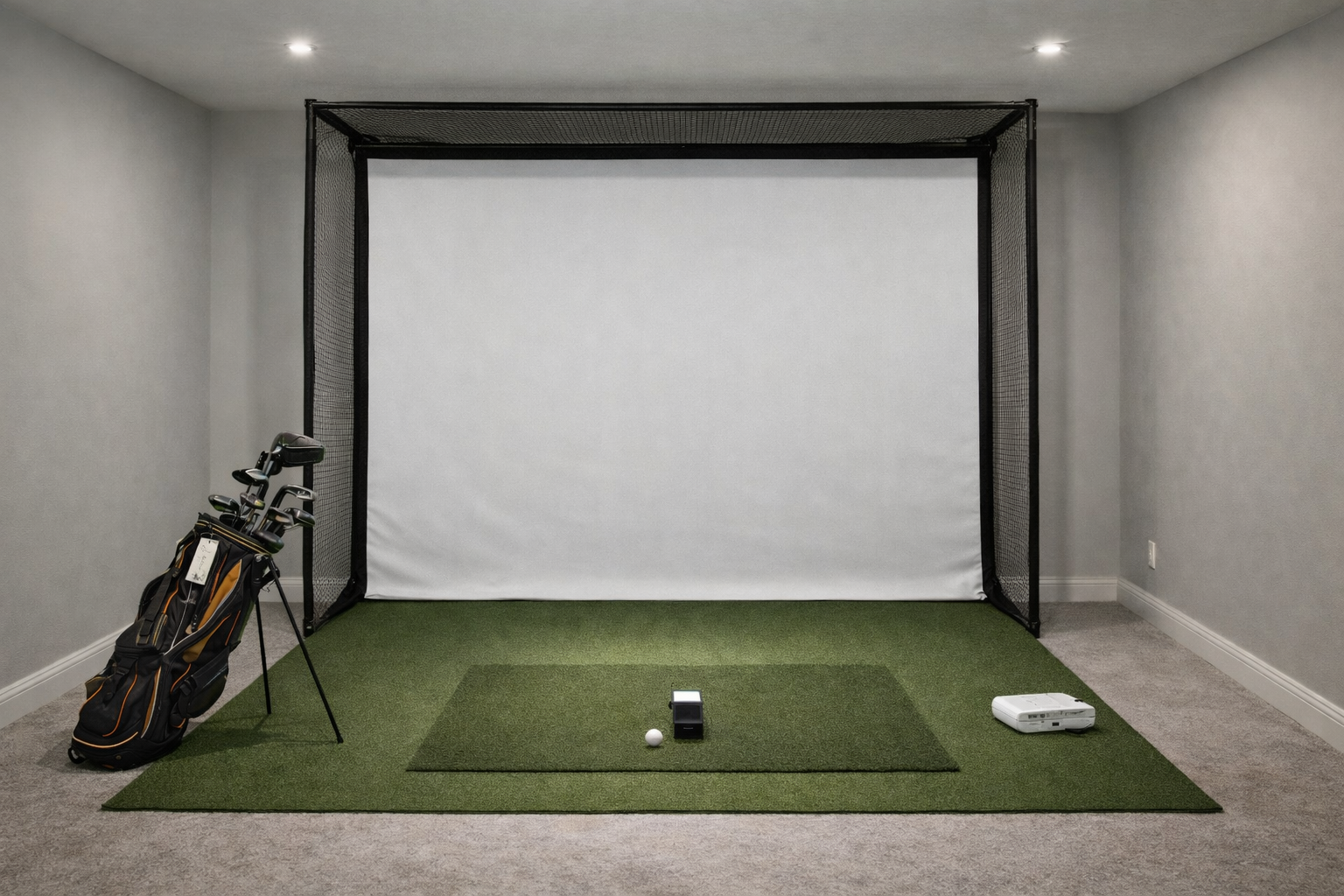
Small-space simulator buyers already know the room is the main problem. The biggest mistake is pretending a tight room can deliver the same simulator experience as a wider, deeper, easier room if you just buy the right gear. Usually it cannot.
A good small-space setup is about making the right compromises in the right order. That usually means protecting swing safety first, choosing a monitor that fits the room more naturally, and refusing to waste money on projector or enclosure ambition the room does not really support.
How this site approaches recommendations
IndoorGolfSetup.com is built around room fit, budget realism, and long-term livability rather than just spec-sheet hype. The goal is to help buyers choose a setup that actually fits their space and feels worth owning after the novelty wears off.
Some pages on this site may include affiliate links. That does not change the recommendations: the goal is still to sort products by room fit, budget, and who each option actually makes sense for. Read the full affiliate disclosure.
- Best overall small-space path: indoor-first monitor with a realistic net or compact enclosure setup
- Best for tighter rooms: simpler side-of-ball setup path
- Best budget route: practice-first build that stops short of pretending to be a dream sim room
- Best for mixed-use spaces: lower-friction setup and teardown path
What small spaces actually change
Width becomes a confidence problem
A room can seem workable on paper and still feel cramped once the mat is down and a real swing starts. Width is often the thing that makes buyers regret forcing the room.
Depth changes monitor choice
Shallow rooms push you toward setups that fit more naturally indoors. If the room is already short on depth, buying as though you have a full easy bay usually makes the whole build worse.
Ceiling height makes every compromise feel bigger
In a tight room, lower ceilings make driver feel even less realistic and make setup simplicity more valuable.
Small-space decision order
In a small simulator room, the order matters. Do not start with a projector, enclosure, or package until the swing area and launch monitor position are realistic.
- Confirm swing clearance first. Use the ceiling height guide and depth guide before comparing gear.
- Choose the launch monitor by room type. Photometric units are often easier indoors because they sit beside the ball instead of needing long ball flight behind and ahead of impact. Compare the tradeoff in photometric vs radar launch monitors.
- Decide whether this is a screen room or a net room. A full screen feels better, but a net may be more realistic in tight rooms. See net vs enclosure.
- Solve projector placement last. Once the hitting area and screen size are set, use the projector guide and short-throw projector guide.
The smartest small-space setup paths
Best overall for most tight rooms
The safest answer is usually an indoor-first monitor, a realistic hitting position, and a containment setup that does not steal unnecessary depth. That gives you a room that still feels usable instead of a room that looks maxed out before you even swing.
Buy this if: you want the room to feel comfortable enough to use regularly.
Skip this if: you actually have enough room to build a less compromised garage or basement setup and are only trying to save a little floor space.
Best budget small-space path
For many buyers, the smart move is a simpler starter build: practical monitor choice, solid mat, and clean containment. That is usually a better use of money than overspending on projector polish in a room that already needs compromise.
Best mixed-use room path
If the simulator shares space with storage, a car, or regular family use, setup friction matters almost as much as fit. The better buy is often the one that is slightly less immersive but much easier to live with.
What to compromise on first
- Projector ambition before room fit is solved.
- Full-driver expectations in rooms that clearly want a more conservative setup.
- Oversized enclosure plans that make the room feel worse, not better.
What not to compromise on
- Safe swing clearance.
- A mat you can actually use repeatedly.
- Honest expectations about the kind of simulator experience the room supports.
When a small-space simulator is still worth building
It is worth building when the setup feels intentional, safe, and easy enough that you will actually use it. It is not worth building when the room turns every swing into a negotiation and every purchase into an attempt to prove the room can be something it clearly is not.
Model-specific space requirement guides
Start with the room, then narrow the setup by launch monitor type. The links below move from general room planning into specific launch monitor fit questions.
Bottom line
The best golf simulator for a small space is usually the one that accepts the room early instead of fighting it. That means tighter monitor logic, simpler containment, better compromise discipline, and less obsession with recreating a full dream build in a room that clearly wants a smarter lighter-touch setup.
Start with the full room-size guide Check ceiling-height limits See low-ceiling options Compare the best indoor monitor fits
Best next reads
Related planning guides
Use these planning guides to narrow the room and hardware choices before spending on a full build.
Projector placementProjector aspect ratioOverhead vs floor launch monitorRetractable setup
Start-here and problem-solving guides
How to build a home golf simulatorLow ceiling guideRoom depth guideWithout projector
Basement and ceiling-height follow-ups
Basement rooms are usually limited by ceiling height, depth, and projector placement rather than only by budget.
Basement simulator setupLow-ceiling simulator guideRoom depth guide