Best Golf Simulator for Basement
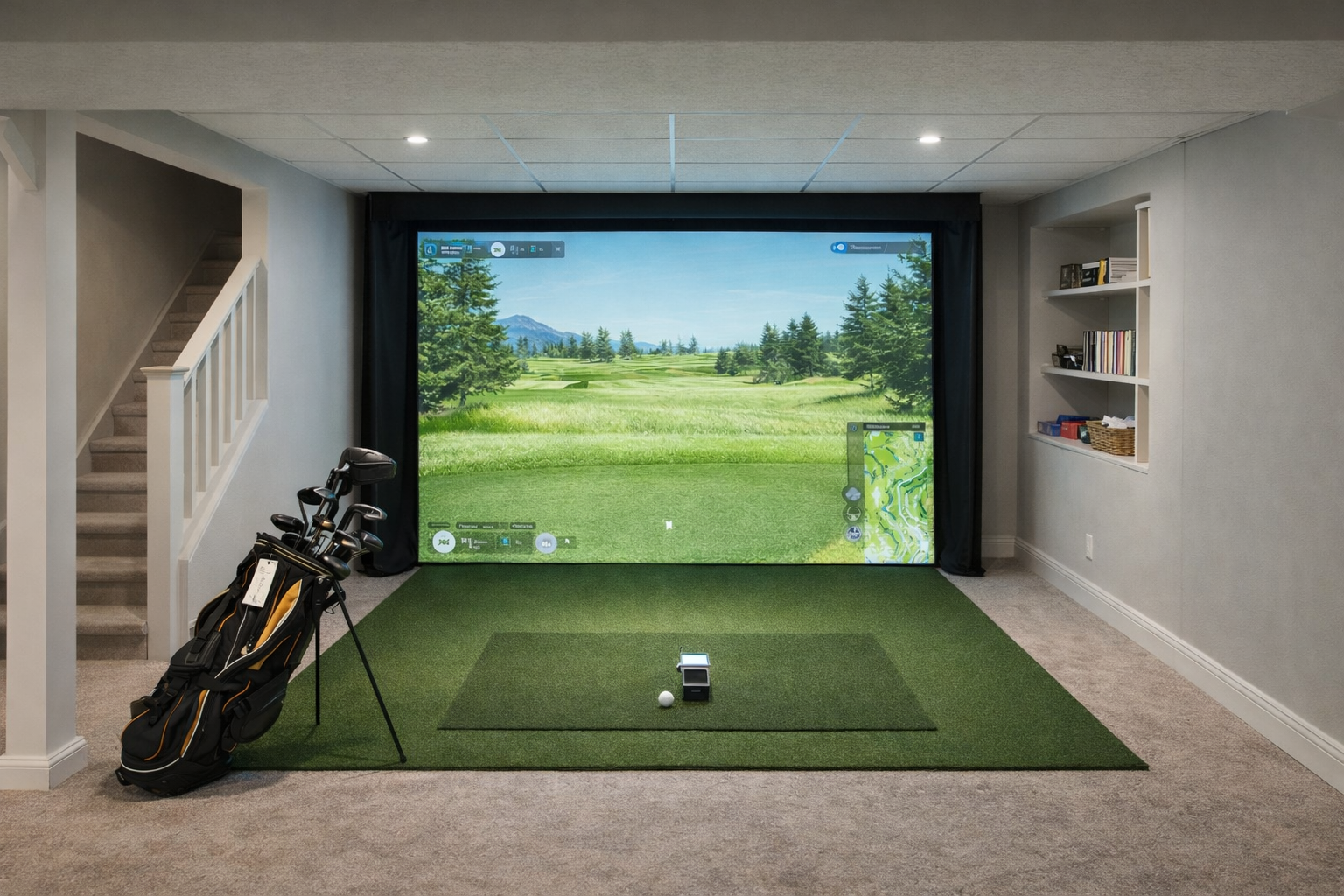
A basement can be one of the best rooms in the house for a golf simulator, but only when the room actually wants to be a simulator room. The mistake buyers make is seeing four walls and climate control and assuming that automatically means easy fit, easy driver use, and easy projector placement.
The best basement setup is usually the one that respects the room early. Ceiling changes, beams, support posts, awkward soffits, and finished-room tradeoffs matter here more than they do in generic simulator roundups.
How this site approaches recommendations
IndoorGolfSetup.com is built around room fit, budget realism, and long-term livability rather than just spec-sheet hype. The goal is to help buyers choose a setup that actually fits their space and feels worth owning after the novelty wears off.
Some pages on this site may include affiliate links. That does not change the recommendations: the goal is still to sort products by room fit, budget, and who each option actually makes sense for. Read the full affiliate disclosure.
- Best overall basement path: balanced indoor-first setup built around honest ceiling and layout planning
- Best for lower ceilings: more conservative monitor and enclosure path that stops fighting the room
- Best for finished basements: cleaner, quieter, more polished setup route
- Best value path: strong basics before premium polish
Why a basement can be such a good simulator room
- You can usually leave it assembled instead of setting up and tearing down constantly.
- Light control is often better than in a garage.
- Climate control makes longer sessions easier to live with.
- A good basement build can feel more like a real room and less like a temporary bay.
Basement fit checks before buying gear
A basement can be a great simulator room, but it punishes assumptions. Before buying a package, confirm the parts of the room that are hard to change.
| Basement issue | What to check | Related guide |
|---|---|---|
| Ceiling height | Measure the actual swing area, not just the finished ceiling height on paper. | Ceiling height |
| Depth | Leave room for the ball, screen, enclosure, stance, and safe spacing behind the hitting area. | Depth guide |
| Projector placement | Basements often have joists, ducts, low ceilings, or beam lines that make mounting trickier. | Projector guide |
| Screen/enclosure fit | The screen needs enough width and height to feel useful without overwhelming the room. | Simulator screens |
What makes basements tricky
Ceiling height still rules everything
The classic basement mistake is calling the room “good enough” because you can take a cautious swing. A basement that technically works can still be an irons-only room or a room where driver always feels forced.
Posts, beams, and odd room shapes matter more than square footage
Basements often look open until the mat, hitting line, enclosure, projector, and backswing path all have to coexist. The room needs clean usable space, not just raw square footage.
Finished-room compromises are real
If the basement is also a theater room, family room, or nicer finished space, the smartest build is usually the one that fits that reality instead of pretending the room is a commercial sim bay.
The smartest basement setup paths
Best overall for most basement buyers
A balanced indoor-first setup with a quality mat, realistic enclosure, and a launch monitor that does not demand idealized depth is usually the safest basement answer. It gives you a room that feels good to use instead of one that looks ambitious but fights you every session.
Best for lower-ceiling basements
Get more conservative, not more heroic. Smaller-space-friendly monitor choices, simpler containment, and more honest club expectations usually produce the better room.
Best for finished basements
If the room has to stay part of the house, quieter screens, cleaner visuals, and a more polished projector path start to matter more than just cramming in the biggest enclosure you can find.
Buy this setup path if...
- The basement is clearly easier to dedicate than the garage.
- The ceiling is truly workable, not just survivable.
- You want a setup that stays assembled and gets used often.
Skip the basement-first plan if...
- The ceiling makes every club choice feel like a negotiation.
- Beams or support posts ruin the hitting line.
- You are choosing the basement because it sounds nicer than the garage, not because it actually fits better.
What buyers get wrong in basements
- They focus on room length and ignore beams, drops, or height changes.
- They buy for driver before proving driver is realistic.
- They overbuild the room before confirming swing comfort.
- They assume a finished basement should automatically get a projector-heavy premium build.
Model-specific space requirement guides
Start with the room, then narrow the setup by launch monitor type. The links below move from general room planning into specific launch monitor fit questions.
Bottom line
A basement can absolutely be the best place to build a simulator. It often becomes the cleanest and most satisfying long-term setup in the house. But only if the ceiling and layout support it honestly. If the room does not, it is better to admit that early than spend a lot of money fighting a room that clearly wants a different kind of build.
Check ceiling-height reality first See low-ceiling setup advice Match projector choices to the basement Go back to the full simulator roundup
Basement simulator problems to solve before buying
A basement can be one of the best places for a home golf simulator, but only if you solve the boring problems first. Ceiling height gets most of the attention, but the real-world issues are usually a mix of swing clearance, posts, moisture, noise, flooring, power, and whether the room can stay usable when the simulator is folded away.
| Basement issue | What to check | Best path |
|---|---|---|
| Low ceiling | Can the tallest golfer swing the longest club they plan to use? | If driver is questionable, design for irons/wedges or use another room. Do not buy a full enclosure before testing swings. |
| Support posts or beams | Do they interfere with stance, backswing, projector throw, or screen width? | Measure the hitting position from the actual ball, not from the wall. |
| Moisture and finished surfaces | Is the room dry enough for electronics, turf, screen material, and a computer? | Fix water/humidity problems before adding expensive gear. |
| Noise above the room | Will impact sounds carry into bedrooms or living space? | Prioritize mat quality, screen distance, side padding, and hours-of-use expectations. |
Ceiling-height reality
Carl’s Place frames 8 feet as a limited-swing situation, 9 feet as often workable for some clubs and golfers, and 10 feet or more as the more comfortable basement-simulator zone. That matches the practical rule for buyers: the number on the tape measure is only the start. Your height, swing plane, driver use, mat thickness, and any ceiling obstructions all matter.
Best basement setup if you are unsure
Start with the safest reversible setup: good mat, net or screen with enough buffer, portable or side-mounted launch monitor, and no permanent projector decision until the hitting position is proven. Once the swing area is comfortable, then decide whether the basement deserves a full screen, enclosure, projector, and software build.
Best next reads
Related planning guides
Use these planning guides to narrow the room and hardware choices before spending on a full build.
Projector placementProjector aspect ratioOverhead vs floor launch monitorRetractable setup
Start-here and problem-solving guides
How to build a home golf simulatorLow ceiling guideRoom depth guideWithout projector